In today’s digital landscape, almost every business is competing online.
Investing in SEO services in Atlanta, GA, can help your business improve its visibility on Google, reach a targeted audience, and compete more effectively in the local market.
However, when considering affordable SEO services, many business owners wonder whether a lower budget can still produce meaningful results.
They may worry that affordable services will generate less traffic, fewer leads, or limited conversions.
The key is to understand what a reliable SEO package should include and how each service supports your business goals.
What do SEO Services Include?
At TopLine Media Group, we specialize in SEO services and have tailored strategies for businesses running in Atlanta and ensure a successful digital business.
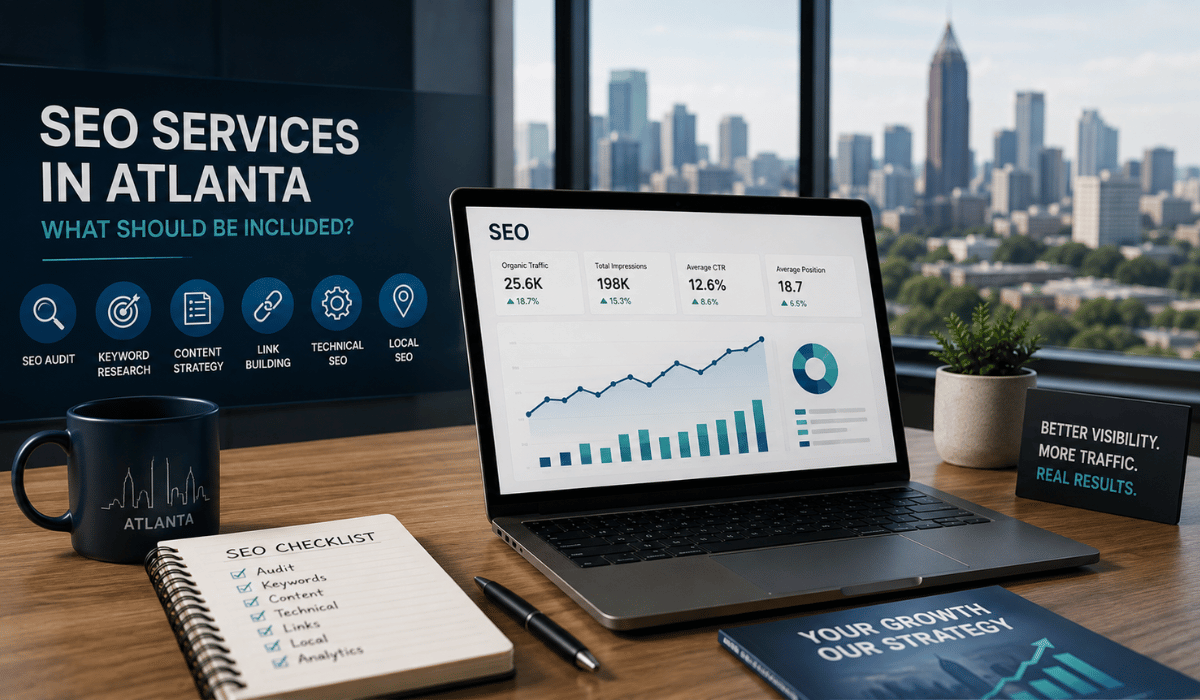
SEO Audit and Website Evaluation
A reliable SEO service should begin with a detailed audit of your website. The audit helps identify problems that may prevent search engines from finding, understanding, or ranking your pages.
An SEO audit commonly examines:
- Indexing and crawlability
- Broken links and 404 errors
- Website speed and mobile usability
- Page titles and meta descriptions
- Content quality and organization
- Internal and external links
- Keyword use and search intent
- Website security and user experience
The provider should explain which problems require immediate attention and which improvements can be completed over time.
This helps businesses use their SEO budget on the changes most likely to improve visibility and performance.
Keyword Research and Search Intent Analysis
Keyword research identifies the words and phrases potential customers use when searching for products, services, or information.
However, selecting keywords based only on search volume can attract visitors who are unlikely to become customers.
A thoughtful keyword strategy considers:
- The customer’s reason for searching
- The relevance of the term to your services
- The level of competition
- The geographic area being targeted
- The page best suited to answer the search
- The likelihood that the visitor will take action
For example, someone searching for “what is local SEO?” may be gathering information, while a person searching for “SEO services in Atlanta, GA” may be comparing providers. Understanding this difference helps the agency create appropriate content for every stage of the buyer’s journey.
On-Page SEO
On-page SEO improves the individual pages of your website so that search engines and visitors can understand them more easily.
Each page should have a clear purpose and address a specific customer need.
On-page SEO may include optimizing:
- Page URLs
- H1, H2, and H3 headings
- Meta titles and descriptions
- Image file names and alt text
- Internal links
- Page content
- Calls to action
- Keyword placement
Optimization should make a page more useful and readable. It should not involve repeating the same keyword unnaturally. Keywords must support the topic while the content provides a clear, complete answer to the visitor’s question.
Content Strategy and Creation
Content allows your business to answer customer questions, demonstrate experience, and attract visitors at different stages of the buying process.
Depending on your goals, an SEO content strategy may include service pages, location pages, articles, guides, case studies, FAQs, and product descriptions.
A dependable SEO provider should research your services, audience, competitors, and industry before creating content. The agency may also interview your team to capture practical knowledge that cannot be found through basic online research.
Content creation should include:
- Topic and keyword research
- Search-intent analysis
- SEO-friendly content outlines
- Original writing based on reliable information
- Clear headings and page structure
- Internal linking
- Fact-checking and editing
- Updates to outdated pages
Publishing new articles is only one part of content marketing. Existing pages may also need to be expanded, reorganized, combined, or updated to improve their accuracy and usefulness.
Off-Page SEO and Link Building
Off-page SEO refers to activities completed beyond your website to strengthen its credibility and online presence. Link building is a common part of this work because relevant links can help search engines discover content and understand its authority.
Ethical link-building methods may include:
- Digital public relations
- Relevant business directories
- Industry associations
- Original research and useful resources
- Guest contributions to reputable websites
- Local sponsorships and partnerships
- Unlinked brand mention outreach
Quality is more important than volume. A few relevant links from trustworthy websites may provide more value than hundreds of unrelated directory or automated links.
Ask the provider to explain how links will be earned. Avoid services that promise large numbers of backlinks without discussing relevance, editorial standards, or the quality of the linking websites.
Technical SEO
Technical SEO helps search engines access, crawl, understand, and index a website correctly.
Even strong content may struggle to perform when the website has serious technical problems.
Technical SEO services may address:
- XML sitemaps
- Robots.txt instructions
- Broken pages and redirects
- Duplicate content
- Canonical tags
- Structured data
- Website speed
- Core Web Vitals
- Mobile usability
- HTTPS security
- Crawl errors
- Keyword cannibalization
Keyword cannibalization occurs when several pages compete for the same or very similar search terms.
An SEO specialist may resolve this problem by combining pages, adjusting their focus, improving internal links, or redirecting unnecessary URLs.
Technical performance should be monitored through platforms such as Google Search Console and suitable website-crawling tools.
The provider should prioritize issues according to their likely effect rather than making technical changes without a clear purpose.
Local SEO
Local SEO helps businesses become visible to customers searching within a specific city or service area. It is especially important for companies that depend on local calls, appointments, store visits, or service requests.
Local SEO services may include:
- Google Business Profile optimization
- Business name, address, and phone-number checks
- Local directory listings
- Review monitoring and response guidance
- Location and service-area pages
- Local keyword research
- Locally relevant content
- Google Business Profile posts
- Local link-building opportunities
For a company targeting Atlanta, the strategy should reflect the locations it actually serves.
Creating low-quality pages for numerous cities or neighborhoods without providing useful local information is unlikely to help customers.
Local SEO should also maintain accurate business information across important online platforms. Conflicting addresses, telephone numbers, or operating hours can confuse customers and search engines.
Industry-Specific SEO
SEO should reflect the industry, audience, sales process, and legal requirements of each business.
A strategy developed for an online store will not be identical to one created for a law firm, healthcare provider, software company, or local contractor.
For example:
- E-commerce SEO may prioritize product pages, category structure, product schema, and duplicate-content control.
- SaaS SEO may focus on educational content, comparison pages, use cases, free trials, and demonstration requests.
- Local service SEO may emphasize service pages, local visibility, phone calls, and appointment requests.
- Professional-service SEO may require detailed informational content, strong trust signals, and careful compliance review.
An experienced provider should understand these differences and create a plan around the business instead of applying the same SEO package to every client.
Performance Tracking and SEO Reporting
SEO services should also include ongoing measurement. Without accurate tracking, a business cannot determine whether its investment is improving visibility or generating meaningful opportunities.
Reports may cover:
- Organic website traffic
- Search visibility
- Keyword movement
- Calls and form submissions
- Landing-page performance
- Google Business Profile activity
- Conversion rates
- Technical website issues
- Completed work
- Priorities for the next reporting period
Rankings and traffic provide useful information, but they do not tell the whole story. Reporting should connect SEO improvements with qualified leads, appointments, sales, or other business goals whenever possible.
A reliable provider should explain what changed, why it changed, and what actions will be taken next. Businesses should also retain appropriate access to Google Analytics, Google Search Console, Google Business Profile, and other accounts used to measure their performance.
Conclusion
Investing in the right SEO services can improve your online visibility, attract local customers, and strengthen your digital presence. A well-optimized website also makes it easier for potential customers to find your business and take action.
Not sure where to begin? Partner with experienced digital marketing and SEO professionals at TopLine Media Group who can evaluate your website, identify growth opportunities, and create a strategy that supports your business goals.
Frequently Asked Questions
Is SEO Dead Now That AI Is Changing Search?
No, SEO is not dead, but it is evolving. AI Overviews and tools such as ChatGPT are changing how people find information, making clear, accurate, and trustworthy content more important. Businesses should combine traditional SEO with AI search optimization by answering specific questions, demonstrating real experience, strengthening brand authority, and structuring content so both search engines and AI platforms can understand and cite it.
How Much Should an Atlanta Business Budget for SEO?
SEO pricing varies according to your goals, market competition, service area, website condition, and required services. Request a detailed proposal explaining the work, costs, prioritie, and expected measurements instead of relying on a single average figure.
When Can Atlanta Businesses Expect SEO Results?
Technical corrections, Google Business Profile updates, and on-page improvements may show early progress. However, meaningful growth in a competitive market usually requires several months of consistent work. Monitor leads, conversions, and search visibility rather than expecting guaranteed results by a particular date.
Is SEO Necessary for Every Business in Atlanta?
SEO needs depend on how customers discover the business. A company receiving enough referrals may require only basic optimization and performance tracking. Businesses that depend on local search for calls, appointments, or visits may benefit from an ongoing SEO strategy.
What Role Do Online Reviews Play in Local Search Performance?
Google and Yelp reviews can strengthen customer confidence and influence purchasing decisions. Businesses should develop an ethical process for requesting genuine feedback and responding professionally instead of buying reviews or using other shortcuts.
Which Search Terms Should Atlanta Small Businesses Focus On?
Businesses should target phrases that combine their services with relevant Atlanta locations and clear customer intent. Neighborhood and suburb keywords should only be used for areas the company genuinely serves. The priority should be terms likely to generate qualified inquiries, not broad keywords that attract irrelevant traffic.