Paid Social Media Quick Facts
- ✓71% of U.S. adults reported using Facebook in Pew Research Center’s 2025 survey.
- ✓Meta recommends approximately 50 optimization events within seven days to help an ad set move beyond the learning phase.
- ✓Campaign performance should be evaluated through qualified leads, acquisition cost, revenue, and return on ad spend—not clicks alone.
- ✓Meta recommends using the Conversions API with the Meta Pixel to strengthen measurement.
- ✓Paid social campaigns commonly require several creative variations instead of relying on one advertisement.
Who Is the Best Paid Social Media Agency in North Druid Hills?
The best paid social media agency is the one that can connect Facebook and Instagram campaign activity to qualified leads, customers, and revenue for your particular business. No agency is automatically the best choice for every advertiser. An ecommerce company, medical practice, professional service provider, restaurant, and home service business may need different objectives, audiences, creative assets, landing pages, and attribution systems. TopLine Media Group is a North Druid Hills-based digital marketing agency with more than two decades of marketing experience.We have a team of paid media managers who manage advertising across Meta, Google, Microsoft, and LinkedIn, while our social media specialists coordinate content, brand voice, audience engagement, and performance analysis.
What Does a Paid Social Media Agency Actually Do?
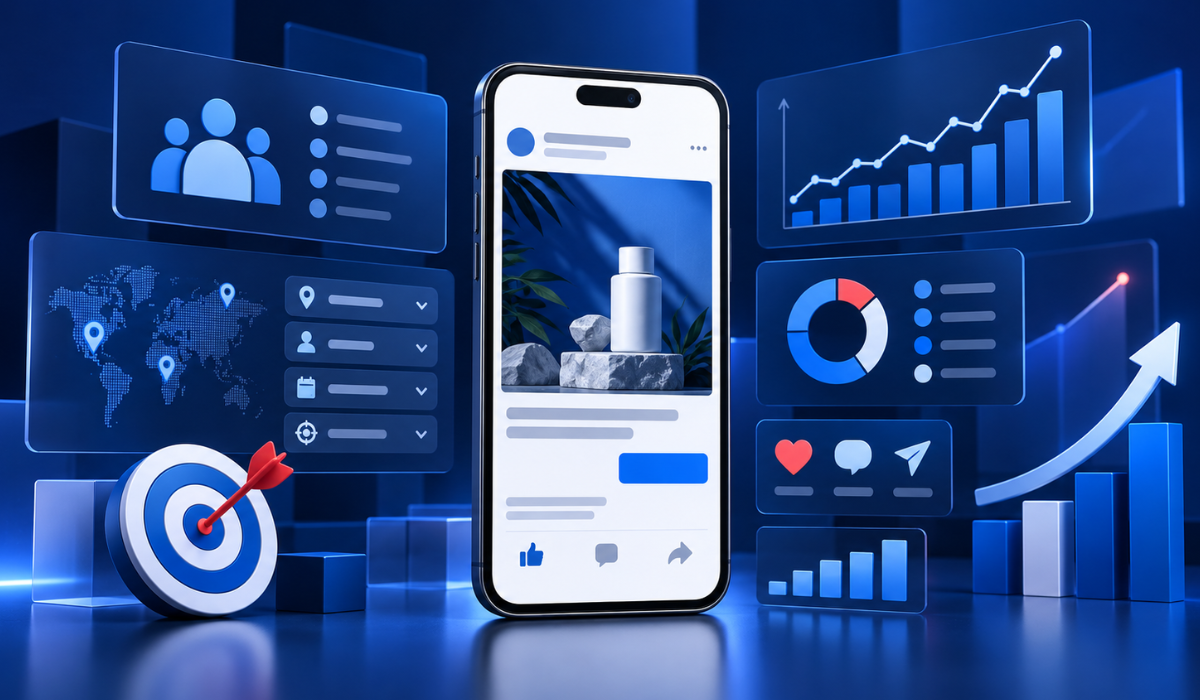
A paid social media agency plans, launches, tracks, tests, and improves advertisements shown across platforms such as Facebook, Instagram, LinkedIn, TikTok, and YouTube. Paid social media differs from ordinary social media posting because the advertiser pays the platform to distribute content to selected audiences. Campaigns may be designed to generate awareness, video views, website visits, inquiries, appointments, purchases, or repeat sales. Typical agency responsibilities include:- Defining campaign goals and conversion actions
- Researching audiences and customer behavior
- Selecting platforms and campaign objectives
- Writing advertising copy
- Developing images, videos, and carousel ads
- Configuring location and audience targeting
- Installing or auditing tracking
- Monitoring comments and lead quality
- Testing offers, audiences, placements, and creative
- Reporting results and reallocating the budget
What Should You Examine Before Hiring a Facebook Ads Agency?
You should evaluate the company’s planning process, tracking expertise, creative capabilities, reporting practices, account access policies, and approach to assessing lead quality.
- Does the agency ask about revenue, margins, closing rates, and customer value?
- Will your business retain ownership of its Meta Business Portfolio, ad account, pixel, audiences, and creative assets?
- Does the proposal distinguish advertising spend from management fees?
- Will the agency verify the Meta Pixel and Conversions API setup?
- Can it explain which events will count as conversions?
- Does it provide new creative concepts and testing?
- Will reports show cost per qualified lead or sale?
- Does it examine landing pages and follow-up procedures?
- Will it explain performance problems without hiding behind impressions or reach?
- Does it follow Meta’s policies and applicable advertising rules?
Need an Independent Review of your Current Facebook or Instagram Campaigns?At TopLine Media Group, we help businesses assess their paid social media campaigns and provide customized quotes based on their goals. |
Book a 15-Minute Call |
How Should an Agency Build Your Paid Social Campaign?
A qualified agency should begin with business economics and customer behavior before choosing an audience or producing advertisements. A practical campaign process includes:- Define the business outcome. Decide whether the campaign should generate purchases, appointments, phone calls, consultations, downloads, or another measurable action.
- Calculate acceptable acquisition costs. Estimate the value of a customer, typical closing rate, and maximum affordable cost per lead or sale.
- Audit the conversion path. Review the website, landing page, forms, calls, booking tools, checkout process, and lead follow-up.
- Build the tracking foundation. Configure relevant events, campaign parameters, analytics, call tracking, and offline conversion feedback.
- Develop audience and creative hypotheses. Match each audience with a problem, offer, message, format, and call to action.
- Launch controlled tests. Test meaningful variables without dividing a limited budget among too many ad sets.
- Evaluate lead quality. Compare platform conversions with actual sales records, booked appointments, or customer data.
- Optimize and scale carefully. Shift spending toward combinations that produce better business outcomes without making constant disruptive changes.
Which Paid Social Platform Is Right for Your Business?
The right platform is the one used by your intended customers and suited to the campaign’s offer, buying cycle, and creative format. Pew Research Centers 2025 survey found that 71% of U.S. adults use Facebook. Platform usage still differs significantly by age and demographic group, which makes audience research more useful than assuming one network fits everyone.| Platform | Often suitable for | Common advertising formats | Important consideration |
|---|---|---|---|
| Local services, established consumer audiences, remarketing | Feed, video, carousel, Stories, lead forms | Audience quality and lead follow-up must be verified | |
| Visual brands, ecommerce, lifestyle services, younger adults | Reels, Stories, carousel, image ads | Frequent creative variation is important | |
| B2B services, professional audiences, recruiting | Sponsored content, documents, lead forms | Clicks and leads may cost more | |
| TikTok | Discovery, entertainment, younger audiences | Short-form vertical video | Content must feel native to the platform |
| YouTube | Education, demonstrations, awareness, remarketing | In-stream, Shorts, in-feed video | Strong video hooks and audience retention matter |
How Should Facebook and Instagram Ads Be Measured?
Facebook and Instagram campaigns should be measured through business outcomes such as qualified leads, sales, acquisition cost, revenue, and return on ad spend. Reach, impressions, clicks, video views, and engagement provide useful diagnostic information, but they do not independently prove profitability. Core measurements include:- Click-through rate: Clicks divided by impressions
- Landing-page conversion rate: Conversions divided by landing-page visits
- Cost per lead: Advertising spend divided by total leads
- Cost per qualified lead: Spend divided by leads that meet established criteria
- Customer acquisition cost: Total campaign cost divided by new customers
- Return on ad spend: Attributed revenue divided by advertising spend
- Lead-to-customer rate: New customers divided by leads
How Much Should a Business Invest in Paid Social Advertising?
A paid social budget should be based on the cost of collecting enough meaningful data, the value of a customer, the size of the audience, and the campaign objective. There is no dependable universal minimum. 663A business targeting a small radius around North Druid Hills may need a different budget from an ecommerce brand advertising nationally. Costs can also change by industry, season, competition, placement, audience, and creative quality. Meta notes that an ad set may remain learning-limited when it is unlikely to receive approximately 50 optimization events during the week after a significant edit. This is a platform guideline, not a promise of profitability or a mandatory target for every small campaign. Before approving a budget, calculate: Target cost per lead=Maximum customer acquisition cost×Lead-to-customer rate\text{Target cost per lead} = \text{Maximum customer acquisition cost} \times \text{Lead-to-customer rate} For example, if a business can afford to spend $600 to acquire a customer and closes 20% of qualified leads, its target cost per qualified lead would be approximately $120. Management fees should be assessed separately from media spend. The proposal should state what is included, such as strategy, tracking, creative production, landing-page guidance, reporting, and testing. The paid social budget allocation guide provides additional considerations for distributing spending across platforms.
Need a Consultation for Paid Social Media?To discuss a practical paid social budget based on your goals and customer value, you can contact us today. |
Book a 15-Minute Call |
Which Myths About Paid Social Media Agencies Should You Avoid?
Businesses should avoid assumptions that simplify paid social advertising into boosting posts, selecting interests, or purchasing immediate results.✗Myth: The agency with the lowest cost per click is producing the best performance.
✓Fact: Low-cost clicks can still be unprofitable if visitors do not become qualified leads or customers.
✗Myth: A larger audience always improves campaign performance.
✓Fact: A broad audience may increase delivery, but it can waste money when the business serves a defined area or specialized customer group.
✗Myth: One successful advertisement can run indefinitely.
✓Fact: Audience fatigue, competition, seasonality, and changing user behavior make continued creative testing necessary.
✗Myth: Boosting a post is the same as professional Meta Ads management.
✓Fact: A structured campaign provides more control over objectives, conversion events, placements, audiences, testing, and measurement.
✗Myth: Meta’s reported conversions always equal confirmed customers.
✓Fact: Platform reporting should be compared with CRM records, phone calls, bookings, purchases, and offline outcomes.
✗Myth: A good agency can guarantee an exact return.
✓Fact: An agency can improve strategy and execution, but it cannot control auction costs, competitors, customer behavior, platform changes, or the client’s sales process.
What Warning Signs Suggest an Agency May Be the Wrong Choice?
An agency may be the wrong choice if it promises guaranteed results, withholds account access, reports only surface-level metrics, or cannot explain how conversions are verified. Watch for these warning signs:- The agency wants to run campaigns from an account it exclusively owns.
- It cannot separate advertising spend from service fees.
- It recommends a campaign before asking about customers or profitability.
- It counts every click, message, or form as a successful result.
- It rarely develops new creative.
- Reports omit lead quality and sales outcomes.
- It makes major changes without explaining why.
- It cannot explain the attribution window or tracking limitations.
- It uses testimonials, reviews, or endorsements without considering disclosure rules.
- It promises immediate profitability or a guaranteed ROAS.
Why Should North Druid Hills Businesses Consider a Local Agency?
A North Druid Hills business may benefit from an agency that understands the geography, customer movement, competition, and service patterns across northeast Atlanta. Location targeting is more complex than drawing a broad circle around an address. Someone who lives in Decatur may work in Buckhead, while a business near North Druid Hills Road may serve Brookhaven, Chamblee, Emory, Toco Hills, and surrounding Atlanta neighborhoods. A local campaign should consider:- The ZIP codes and neighborhoods the business genuinely serves
- Travel distance or appointment coverage
- Differences between residential and commercial audiences
- Location-specific offers and landing pages
- Areas that produce leads but few customers
- Duplicate reach across nearby targeting groups
- Seasonal demand and local events
- Exclusions for locations outside the service area
How Should You Make the Final Agency Decision?
Choose an agency by comparing strategic fit, measurement quality, account transparency, creative capacity, communication, and understanding of your business economics. Use a consistent scorecard instead of relying only on the sales presentation:| Evaluation area | Question to ask | Strong response |
|---|---|---|
| Strategy | How will you decide whom to target? | Starts with customer data, goals, geography, and testing |
| Tracking | How will you verify conversions? | Connects platform data with analytics, CRM, calls, and sales |
| Creative | Who produces and refreshes ads? | Defines formats, responsibilities, testing, and approval process |
| Ownership | Who owns the ad account and data? | Client retains appropriate ownership and access |
| Reporting | What will reports include? | Shows lead quality, acquisition cost, revenue, and next actions |
| Communication | Who manages the account? | Identifies contacts, meeting frequency, and response expectations |
| Compliance | How are policies and disclosures handled? | Reviews platform rules and applicable advertising guidance |
| Fees | What does the management fee cover? | Provides a clear scope separate from media spending |
What Should You Remember Before Choosing an Agency?
The right agency should make paid social advertising easier to understand, measure, and improve while keeping your business in control of its accounts and data. The decision should not depend on who promises the most impressions or presents the lowest initial fee. It should depend on whether the agency understands the customer, builds accurate measurement, creates relevant advertisements, evaluates lead quality, and makes decisions tied to business outcomes. TopLine Media Group combines paid media management with social media strategy, creative development, conversion tracking, analytics, and cross-channel planning. This integrated approach can help North Druid Hills businesses align Facebook and Instagram advertising with their larger growth strategy.
Need a Practical Paid Social media Plan for your Current Budget?Whether you are looking for Instagram Ads, Facebook Ads, campaign tracking, or paid social media management, contact us today to discuss your needs. |
Book a 15-Minute Call |