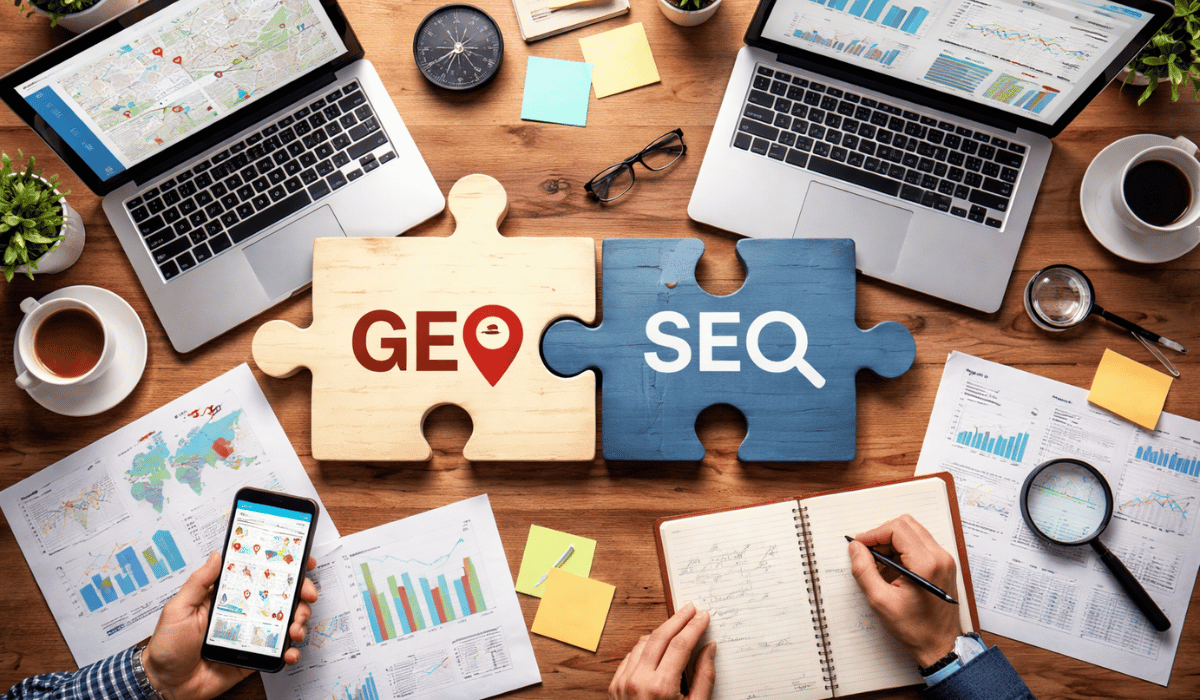
In the ever-evolving world of digital marketing, GEO and SEO has emerged as a crucial component, especially for businesses aiming to improve their local search rankings.
Traditionally, SEO focused on content optimization, backlinks, and keyword targeting, all aimed at increasing visibility on a broader scale.
However, as local search has grown in importance, GEO and SEO utilizes geolocation data to target local audiences has become indispensable.
In this blog, we’ll explore how GEO and SEO complements traditional SEO techniques instead of replacing them, providing businesses with an integrated strategy to achieve both broader and more localized visibility.
What Is GEO and SEO? A Deeper Dive into Local Targeting
GEO and SEO refers to the optimization of a website or online presence to rank well in local search results.
It takes into account the geographic location of users and tailors the search results accordingly.
Geotargeting allows businesses to connect with their customers by focusing on location-based keywords and creating content that resonates with users in specific areas.
In combination with traditional SEO, GEO SEO can elevate a business’s visibility by ensuring it shows up for location-specific queries and local services.
How Traditional SEO Forms the Backbone of Digital Visibility
While GEO and SEO is gaining traction, traditional SEO remains fundamental to any successful online marketing strategy.
Traditional SEO focuses on three core areas: on-page optimization, off-page strategies, and technical SEO.
By optimizing content with targeted keywords, creating backlinks, and ensuring website speed and security, traditional SEO ensures a broader reach and lays the foundation for effective digital visibility.
These techniques are crucial for attracting organic traffic, building domain authority, and reaching global or national audiences.
Traditional SEO continues to drive organic traffic to your website by targeting broader search intent, ensuring that your content is discoverable by users across various locations, not just the local area.
This gives businesses the ability to scale their reach while still focusing on their local market with GEO SEO.
How GEO and SEO and AI Work Together for Smarter Local Search Optimization
AI and GEO and SEO are a powerful combination that enhances the accuracy and effectiveness of local targeting.
AI-driven search optimization uses machine learning algorithms to better understand user intent, which can then be integrated with geolocation data for more personalized search results.
This allows search engines like Google to provide users with results that not only match their query but also take their location into account.
Integrating GEO SEO with AI can optimize local search rankings by predicting the needs of users based on their location.
For example, when a user searches for “best pizza near me,” AI algorithms and GEO SEO work together to show results from nearby pizzerias, increasing the likelihood of conversion.
The Synergy Between GEO and Traditional SEO
Rather than viewing Generative engine optimization (GEO) and SEO as a replacement for traditional SEO, it’s best to understand how the two can work in tandem for maximum impact.
Here’s how GEO and SEO enhances traditional SEO:
Local Search Results and Broader Reach
By targeting local search queries, GEO and SEO helps businesses show up in search results for specific geographic areas.
This is especially important for businesses serving local communities.
However, traditional SEO ensures that the website also ranks for broader, non-location-specific keywords, enabling businesses to capture organic traffic from outside their local area.
Personalized Content for Local Audiences
With GEO and SEO, content can be tailored to the needs and preferences of users based on their location.
This localized approach enhances the relevance of your content, which leads to higher user engagement.
Traditional SEO ensures that this localized content is optimized for both search engines and users, striking a balance between local relevance and broader search intent.
Google My Business (GMB) and Local SEO
Google My Business (GMB) is an essential tool for businesses aiming to enhance their local SEO presence.
By optimizing a GMB profile with accurate location data, hours, and services, businesses can increase their chances of appearing in local search results.
GEO and SEO ensures that businesses are highlighted on maps and localized searches, while traditional SEO ensures the website ranks well across a wider range of topics, including services and product keywords.
Best Practices for Integrating GEO SEO with Traditional SEO for Maximum Impact
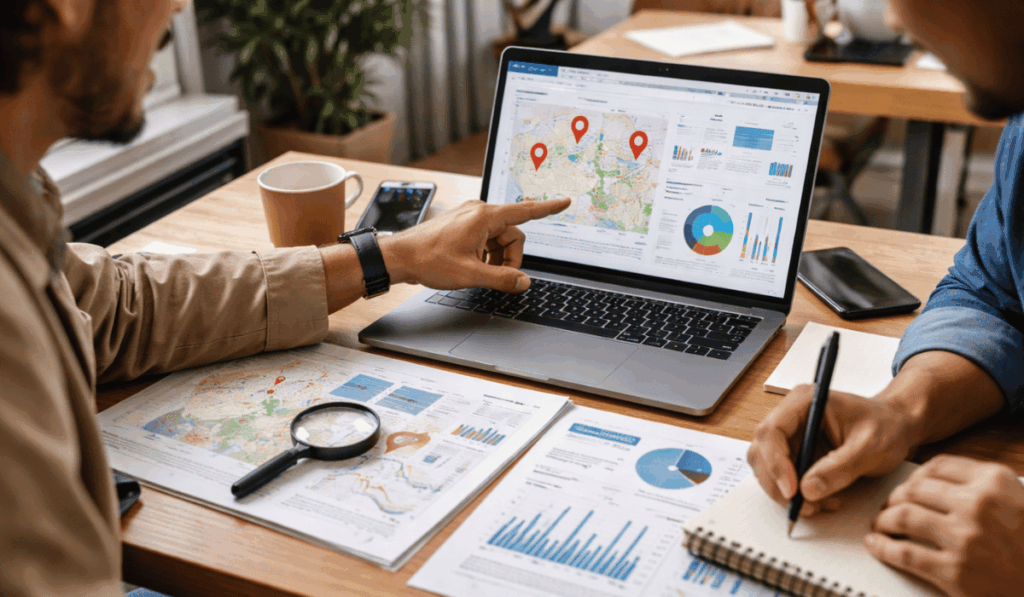
To unlock the full potential of your online presence, combining GEO, SEO and traditional SEO is key.
Integrating both strategies effectively can improve your search rankings, increase local visibility, and drive more qualified traffic to your website.
Here’s how to ensure you make the most of both approaches:
Professional Optimization for Local Keywords
Optimizing for local keywords is essential for any business that wants to reach a local audience.
However, the integration of local SEO with broader, traditional SEO requires a careful balance.
A professional SEO team can help identify the most effective location-specific keywords for your business, ensuring that your content is tailored to your local audience while still addressing the broader search intent.
For example, if you provide roofing services in Atlanta, optimizing for terms like “roof repair in Atlanta” or “best roofing contractor in Georgia” will help your business stand out in local searches.
At the same time, targeting broader keywords related to your industry allows you to capture a wider audience.
Google My Business Optimization by Experts
Properly setting up and optimizing your Google My Business (GMB) profile is essential for dominating local search results.
A professional team will ensure that all critical information, such as your business name, address, phone number (NAP), hours of operation, and customer reviews is accurately presented and optimized for maximum impact.
Additionally, GEO SEO strategies can be seamlessly implemented, ensuring that your business is properly marked on Google Maps and appears in relevant local search results.
If you want to enhance your local visibility and attract more customers, expert optimization of your GMB profile is an investment you can’t afford to overlook.
Strategic Local Link Building
Link building remains one of the most powerful elements of traditional SEO.
To strengthen your local SEO presence, you should focus on securing high-quality local backlinks from reputable businesses, local media outlets, and industry-related directories.
A professional SEO service will help you develop a targeted local link-building strategy that not only boosts your local authority but also supports broader link-building efforts across various platforms.
With the right approach, local backlinks can significantly increase your search rankings and drive more relevant traffic to your website.
When it comes to GEO, SEO and traditional SEO, working with professionals can ensure that these strategies are executed to their full potential.
At TopLine Media Group, we specialize in creating tailored, integrated SEO solutions that maximize both local and global visibility.
Our expert team can help optimize your website, improve your search rankings, and drive more qualified leads.
Contact us today to get started on a comprehensive SEO strategy that delivers real, measurable results for your business.
Challenges and Pitfalls to Avoid When Using GEO and SEO
Though GEO and SEO is a powerful tool, over-reliance on it can limit your audience reach. Here are some common pitfalls to avoid:
Focusing Too Much on Local Keywords
While GEO and SEO can help you rank for location-specific keywords, relying too heavily on them may limit your visibility.
It’s important to maintain a balance by incorporating broader keywords that are still relevant to your business.
Neglecting Global SEO Needs
Even if you’re a local business, there may be opportunities for global SEO or serving customers outside your immediate geographic area.
Don’t let local-focused strategies overshadow your broader SEO needs.
Conclusion: Blending GEO, SEO with Traditional SEO for Success
As GEO and SEO continues to play a pivotal role in modern digital marketing, it’s clear that it doesn’t replace traditional SEO, but it complements your business.
By using both strategies, businesses can create a more robust, location-aware SEO presence that drives both local and national traffic. Whether you’re optimizing for local keywords, improving Google My Business profiles, or focusing on broader search queries, integrating GEO SEO with traditional SEO is the key to long-term online success.
Enhance Your SEO Strategy with TopLine Media Group
Ready to take your website’s visibility to the next level with both GEO SEO and traditional SEO?
At TopLine Media Group, we specialize in creating integrated SEO strategies that increase local and global reach, improve search rankings, and drive qualified traffic.
Contact us today to start optimizing your website for success!
Frequently Asked Questions
What is GEO in SEO?
GEO in the context of SEO refers to the geographical targeting used to improve a business’s local visibility. By focusing on users in specific locations, businesses can optimize their online presence to rank for geographically relevant search terms. GEO targeting ensures that search engines understand the local relevance of your website, improving your chances of appearing in localized search results.
How does GEO targeting enhance SEO?
GEO targeting plays a key role in local SEO by allowing businesses to tailor their content to users in a specific geographic area. By using location-specific keywords, creating locally relevant content, and optimizing for tools like Google My Business, businesses can enhance their local search visibility. SEO techniques like backlinking and keyword optimization still apply, but GEO targeting ensures that these efforts are localized to improve relevance.
Can GEO replace traditional SEO?
No, GEO and SEO are complementary rather than interchangeable. While SEO focuses on broader ranking factors, such as backlinks, keywords, and content quality, GEO focuses on location-based optimizations for local searches. Together, they help businesses achieve both broader and more targeted online visibility, ensuring success on a national or global scale, as well as within local communities.
How do local keywords work with traditional SEO?
Local keywords are an essential part of GEO targeting. These keywords, such as “roofing services in Atlanta,” are incorporated into your website’s content, meta descriptions, and headers. Traditional SEO techniques, such as optimizing for non-location-based keywords, are still vital. The combination of both ensures that you rank for broader topics and location-specific searches, capturing a wider audience.
What is the role of Google My Business in GEO and SEO?
Google My Business (GMB) is crucial for both GEO targeting and local SEO. Optimizing your GMB profile ensures that your business appears in local search results and Google Maps when users search for services nearby. Accurate business information, positive reviews, and regular updates improve your local SEO, while GEO targeting ensures that your profile is indexed correctly for users in your target area.
How can I build local backlinks for GEO SEO?
Building local backlinks is an essential part of GEO and SEO, and helps improve your authority within your local community. Local link building involves securing backlinks from geographically relevant websites, such as local news outlets, business directories, and organizations. These links not only strengthen your local SEO efforts but also support broader SEO strategies, increasing your site’s authority and trustworthiness.
How does mobile optimization impact GEO SEO?
Since most local searches are performed on mobile devices, mobile optimization plays a crucial role in GEO and SEO. Mobile-friendly websites are more likely to rank higher in local searches, especially since Google uses mobile-first indexing. Ensuring your site is responsive, fast-loading, and optimized for mobile users is essential for both GEO targeting and traditional SEO.
How do I track GEO SEO performance?
To track the effectiveness of your GEO and SEO efforts, monitor local search rankings, website traffic, and conversions from local searches. Tools like Google Analytics and Google Search Console provide insights into how users are finding your website based on their location. Monitoring these metrics alongside traditional SEO KPIs, such as overall site traffic and bounce rate, will help measure the success of your integrated SEO strategy.
What are common mistakes in GEO and SEO?
Common mistakes in GEO and SEO include neglecting Google My Business optimization, using inconsistent location data, or overfocusing on local keywords at the expense of broader SEO strategies. Additionally, failing to optimize for mobile users and not acquiring local backlinks can hinder your local search performance. Avoiding these errors and working with professionals will ensure the best results in both GEO, SEO, and traditional SEO.
How can GEO SEO help businesses compete locally?
By optimizing for GEO SEO, businesses can ensure they appear in local search results, giving them a competitive edge in their geographic area. GEO targeting allows businesses to connect with their local customer base, increase foot traffic, and gain more qualified leads. When paired with traditional SEO, it helps businesses not only compete locally but also increase their broader online visibility.